

Sorry, your browser is not compatible with this application. Please use the latest version of Google Chrome, Mozilla Firefox, Microsoft Edge or Safari.
Supply Chain Resilience Guide
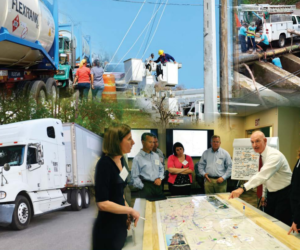
Disasters disrupt preexisting networks of demand and supply. Quickly reestablishing flows of water, food, pharmaceuticals, medical goods, fuel, and other crucial commodities is almost always in the immediate interest of survivors and longer-term recovery.
When there has been catastrophic damage to critical infrastructure, such as the electrical grid and telecommunications systems, there will be an urgent need to resume, and possibly redirect, preexisting flows of life-preserving resources. In the case of densely populated places, when survivors number in the hundreds of thousands, only preexisting sources of supply have enough volume and potential flow to fulfill demand.
During the disasters in Japan (2011) and Hurricane Maria in Puerto Rico (2017), sources of supply remained sufficient to fulfill survivor needs. But the loss of critical infrastructure, the surge in demand, and limited distribution capabilities (e.g., trucks, truckers, loading locations, and more) seriously complicated existing distribution capacity. If emergency managers can develop an understanding of fundamental network behaviors, they can help avoid unintentionally suppressing supply chain resilience, with the ultimate goal of ensuring emergency managers “do no harm” to surviving capacity.
| Format: |
|
| Topics: | |
| Website: | Visit Publisher Website |
| Author(s): |
|
| Publisher: | Federal Emergency Management Agency (FEMA) |
| Published: | April 1, 2019 |
| License: | Public Domain |
| Tags: | infrastructuresupply |




Contact Publisher

Claim Content